
Does Homeowners Insurance Cover Water Extraction?
Often, yes. Most homeowners policies cover water extraction when the damage is sudden and accidental. A burst pipe or an appliance leak is a common example.
Slow leaks, poor upkeep and outside flood water are often not covered. Sewer backup usually needs an extra endorsement with its own lower limit. Every policy is different, so read yours or ask your agent.
Take photos before cleanup starts. Save records of the water source, moisture readings and equipment used. Black Wolf Restoration is IICRC Certified, Licensed and Insured. We offer a free inspection with a written, no-obligation estimate, and we bill insurance directly.
Need water out now? See our water extraction in Greeley service.
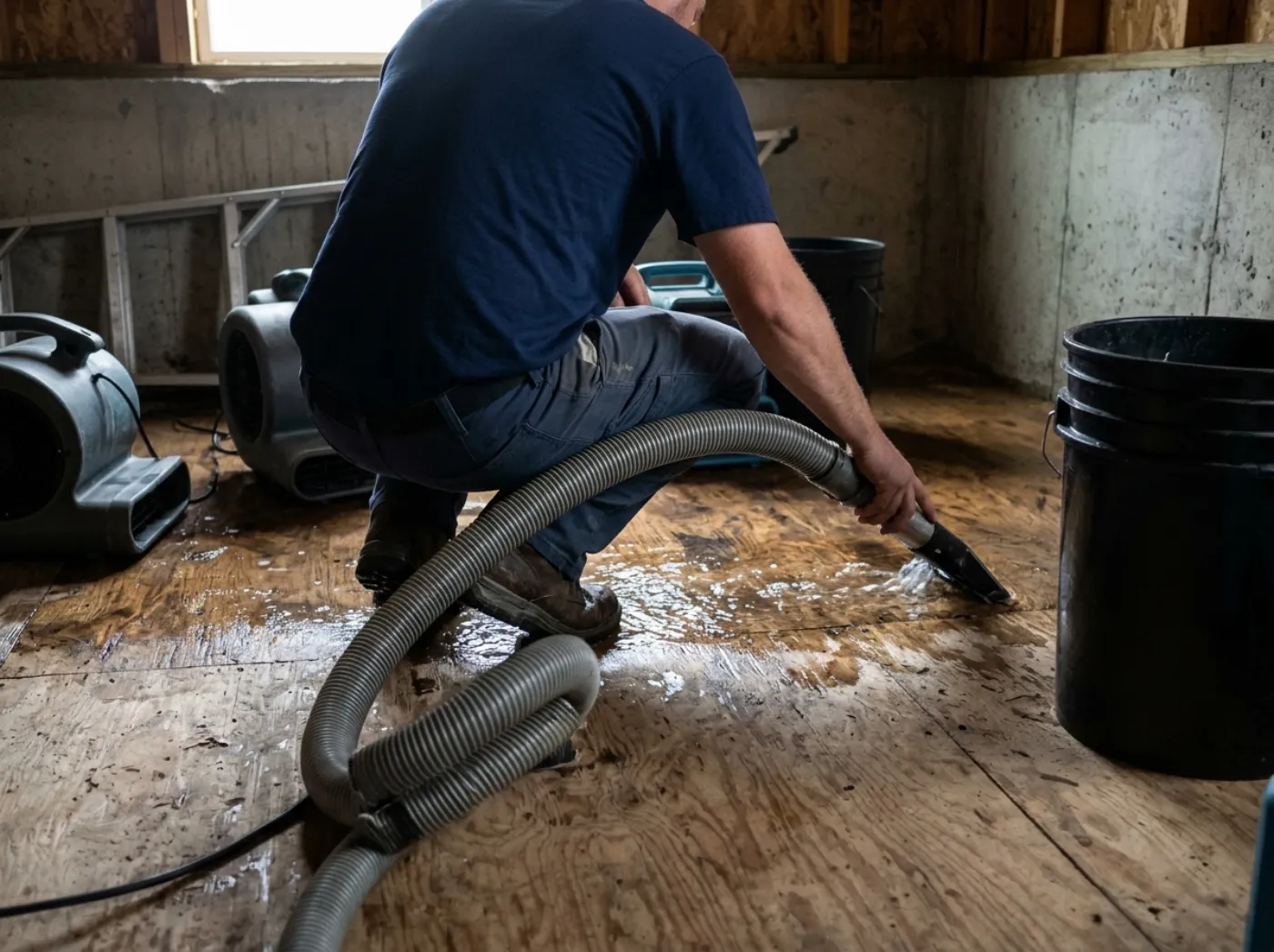
What Homeowners Insurance Usually Covers for Water Extraction
The test is simple. Did the water arrive suddenly and by accident? If yes, your policy often pays.
These causes are commonly covered:
- A burst or frozen pipe
- A leaking dishwasher, washer or water heater
- A supply line that fails
- A roof leak after a covered storm event
Pulling water out fast stops more damage. So insurers often treat extraction as part of the loss. Your limits and deductible still depend on your policy.
Some pipe leaks hide inside walls. We cover that in our burst pipe cleanup service.
When we reach a home, we photograph the wet areas and log the water source. We also record moisture readings before any equipment runs. That record is what an adjuster asks for first, and it is hard to rebuild later.
Water Damage Insurance Often Does Not Cover
Now you know what is often covered. Next, here is what is often left out.
Policies exclude slow leaks and long-term wear. They often exclude damage from poor upkeep. Outside flood water usually needs a separate flood policy. Read your exclusions and endorsements, and ask your agent before you sign anything.
| Cause of Water | Usually Covered? | What to Check |
|---|---|---|
| Burst pipe | Often yes | Sudden damage and your deductible |
| Appliance leak | Often yes | How long it leaked |
| Slow leak over time | Often no | Wear and upkeep exclusions |
| Outside flood water | Usually no | Whether you have a flood policy |
| Sewer backup | Only with endorsement | The endorsement and its limit |
| Poor upkeep | Often no | Maintenance wording |
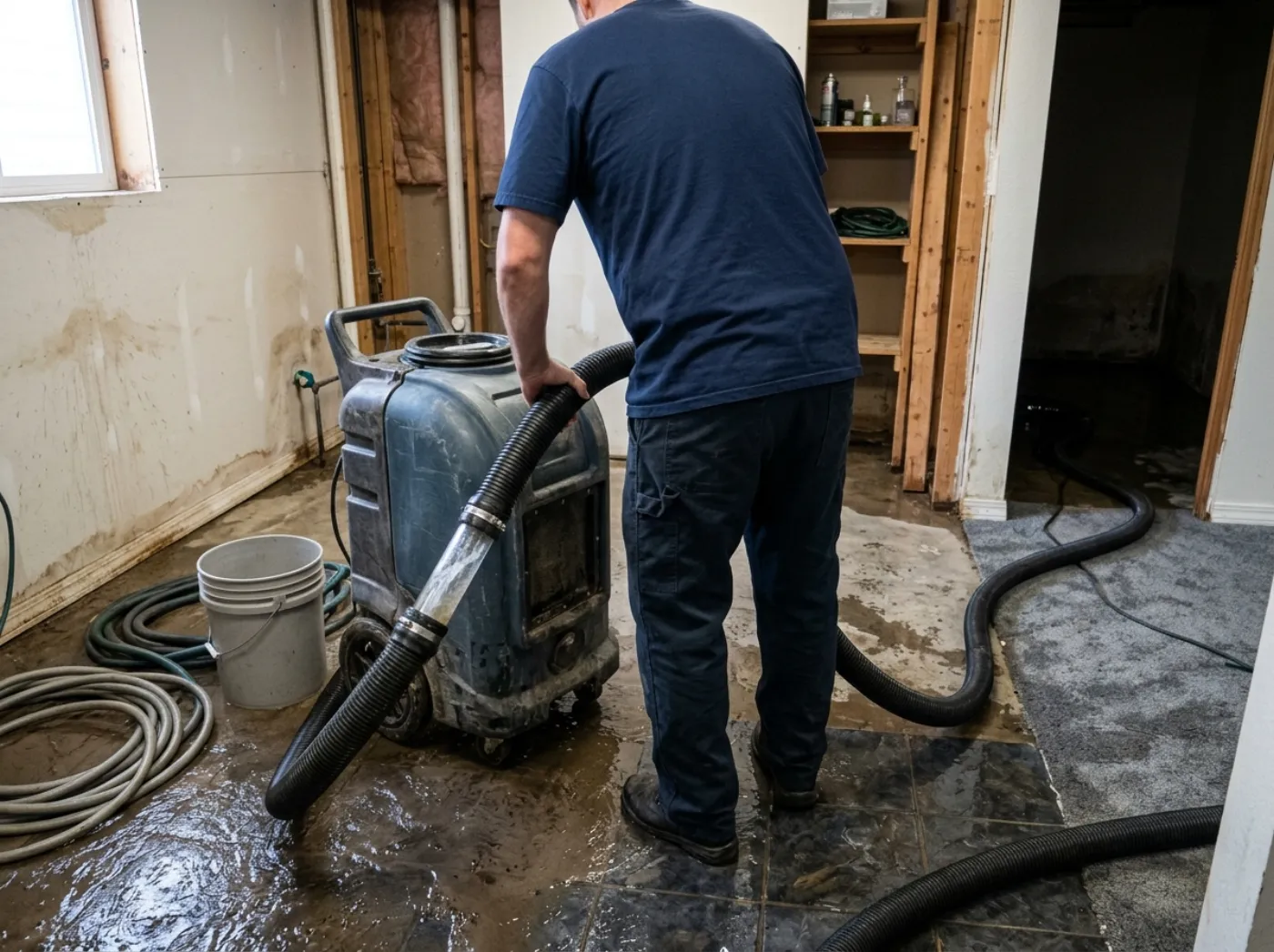
Sewer Backup and Basement Water in Greeley Homes
Basements bring their own rules. Sewer backup is the most confusing case.
- Sewer backup is usually an endorsement, not standard coverage.
- That endorsement has its own lower limit.
- A Colorado federal ruling said surface water that enters a sewer and backs up can fall under sewer-backup coverage. The cause is still disputed.
The city runs 10 sewage pumping stations. If a station fails to operate, sewage could back up into basements. Stormwater runs in a separate system from sewer.
Greeley storms hit fast. On July 1, 2021, flash flooding hit downtown. For basement jobs, see our flooded basement cleanup service.
One thing we see constantly on Greeley calls: homeowners blame the sewer when the problem starts outside. Clay soil swells when wet. Backfill around a foundation can form a clay bowl that holds water. So we check the grade, the downspouts and the window wells first. And if a sump pump runs constantly, we test it, because that points to groundwater.
Need the water out before the policy question gets settled? Call for Greeley water extraction.
Why Insurance Might Deny a Water Damage Claim
Most denials come from a short list of problems.
- The cause of loss is unclear or not documented.
- The loss fits an exclusion.
- Cleanup waited, and the damage grew. Mold can start within 24 to 48 hours on wet organic material.
- Photos or records are missing.
- Your limits or endorsements do not match the loss.
Ask your agent about rate changes after a claim. We cannot answer that for your policy.
What to Do Before You File a Water Damage Claim
Good records help every claim. Here is what to do, in order.
- Stop the water source if it is safe to do so.
- Photograph and video the water and damaged items before cleanup.
- Call your insurer and ask what they need.
- Call a restoration crew right away. Do not wait for an adjuster to start extraction.
- Keep the moisture readings and equipment logs from the crew.
Our crew offers professional water extraction in Greeley and bills your insurer directly.
On every job we map the moisture with a meter and a thermal camera. Water travels past the stain you can see. It moves along framing and under floors, so the wet area is often bigger than it looks.
What Water Extraction Costs and Who Pays
These are typical ranges from other sources, not our price.
| Job | Typical Range |
|---|---|
| Denver metro water damage restoration | $1,132 to $3,794 |
| National, clean water (Category 1) | About $3.50 per sq ft |
| National, Category 2 | About $5.25 per sq ft |
| National, sewage-level water (Category 3) | About $7.50 per sq ft |
Cleaner water costs less than sewage-level water. Insurance may pay all, part or none of the bill. Your deductible applies first.
We give you a free inspection with a written, no-obligation estimate. Learn more about our water extraction service in Greeley.
Get Water Extraction in Greeley Today
Black Wolf Restoration is IICRC Certified, Licensed and Insured. We are open 24/7 and can be on site within 60 minutes. You get a free inspection with a written, no-obligation estimate, and we bill your insurance directly.
Call (970) 714-3978 or use the button below. We start with the water.